The Sacred Significance of Easter Sunday: A Testament to Divine Love and Hope
- Apr 17, 2025
- 2 min read
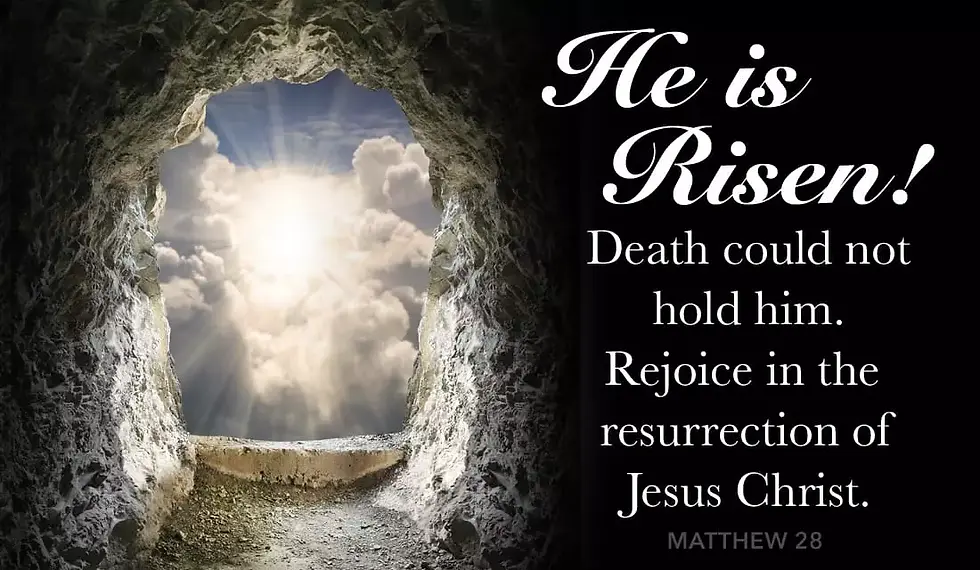
Millions around the world will celebrate Easter Sunday, a day that represents the very cornerstone of Christian faith. As Jesus himself declared, "I am the resurrection and the life. He who believes in Me, though he may die, he shall live. And whoever lives and believes in Me shall never die" (John 11:25-26).
The profound significance of Easter Sunday lies in its demonstration of God's ultimate power over death. In the Gospel of Luke, we find the transformative moment that changed human history forever: "They found the stone rolled away from the tomb, but when they entered, they did not find the body of the Lord Jesus" (Luke 24:2-3). This empty tomb stands as the ultimate testament to Christ's victory over death and sin.
The Apostle Paul emphasizes this pivotal moment in 1 Corinthians 15:4, declaring that "He was buried, and he was raised on the third day according to the Scriptures." This resurrection serves as the foundation of Christian faith, for without it, our belief in God's saving grace through Jesus would be in vain.
The resurrection narrative carries multiple layers of divine significance:
First, it validated Jesus' deity and confirmed His prophecies. When Christ rose from the dead, He proved every word He had spoken about His death and resurrection was true. As proclaimed in Luke 24:34, "The Lord is risen indeed!"
Second, it offers humanity the promise of eternal life. As Peter writes in 1 Peter 1:3, "Praise be to the God and Father of our Lord Jesus Christ! In his great mercy he has given us new birth into a living hope through the resurrection of Jesus Christ from the dead."
Third, the Easter story reminds us that even in life's darkest moments, hope persists. Just as the disciples' despair turned to joy on that first Easter morning, we too can find hope in the promise of resurrection.
In our modern world, where 48% of Americans will gather for Easter meals, these communal celebrations echo the early Christian gatherings where believers shared their joy in the risen Christ. The Apostle Paul writes in Romans 6:4, "We were buried therefore with him by baptism into death, in order that, just as Christ was raised from the dead by the glory of the Father, we too might walk in newness of life."
Easter's message transcends time and culture because it addresses humanity's deepest needs: the need for hope, for meaning, for life beyond death. The significance of Easter is Jesus Christ's triumph over death, offering eternal life to all who believe in Him.